Murchison Falls National Park: Uganda’s Largest National Park and Wildlife Destination

Murchison Falls National Park: Uganda’s Largest National Park and Wildlife Destination

Introduction to Murchison Falls National Park
Murchison Falls National Park is the largest national park in Uganda and one of the country’s most significant protected wildlife areas. Located in north western Uganda, the park extends inland from the shores of Lake Albert and follows the Victoria Nile toward Karuma Falls.
The park is managed by the Uganda Wildlife Authority and forms part of the wider Murchison Falls Conservation Area, which also includes Bugungu Wildlife Reserve and Karuma Wildlife Reserve. Together these protected areas create an important landscape for wildlife conservation in Uganda.
Covering approximately 3,893 square kilometres, Murchison Falls National Park protects a large portion of savanna ecosystems, riverine habitats, and forested areas. Because of its size and variety of environments, the park supports a remarkable diversity of wildlife and birdlife.
One of the defining features of Murchison Falls National Park is the powerful waterfall on the Nile River that gives the park its name. The dramatic section of the river where the Nile forces its way through a narrow gorge before continuing toward Lake Albert is one of the most recognizable natural landmarks in Uganda.
The Location and Geography of Murchison Falls National Park
Murchison Falls National Park lies at the northern end of the Albertine Rift Valley. This location places the park within a region known for its diverse landscapes and ecological importance.
The park stretches across several districts of Uganda including Buliisa, Nwoya, Kiryandongo, and Masindi. Its location makes it one of the most accessible national parks in the country while still maintaining vast wilderness areas.
The Nile River plays a central role in shaping the park’s geography. Flowing from Lake Victoria, the river passes through the park before reaching Lake Albert. As it moves through the park, the river creates wetlands, riverbanks, and fertile areas that support a wide variety of wildlife.
Within the Albert Nile corridor, the park reaches Uganda’s lowest elevation at approximately 612 meters above sea level. The climate in this area is warm, with average daily maximum temperatures around 29°C.
These geographic features create an environment where savanna plains, forests, wetlands, and river systems exist together. This variety of habitats is one of the reasons why Murchison Falls National Park supports such rich biodiversity.

The Powerful Waterfall of Murchison Falls
The waterfall known as Murchison Falls is the natural landmark that defines the park. At this location the Nile River is forced through a narrow gorge before plunging down and continuing its course across the Rift Valley floor.
On most tours to the park, we include a boat cruise that takes you along the Nile to the base of Murchison Falls. This gives you the chance to see hippos, crocodiles, and a variety of birdlife up close while feeling the power of the falls from the water.
The dramatic power of the waterfall makes it one of the most striking natural attractions in Uganda, as it is the most powerful waterful on our planet. The force of the water and the surrounding landscape highlight the importance of the Nile River as the central feature of the park’s ecosystem.
Beyond its visual impact, the river also provides a reliable water source for wildlife throughout the park. Animals frequently gather near the river and its surrounding wetlands, making the Nile corridor an essential habitat within the area.

Wildlife in Murchison Falls National Park
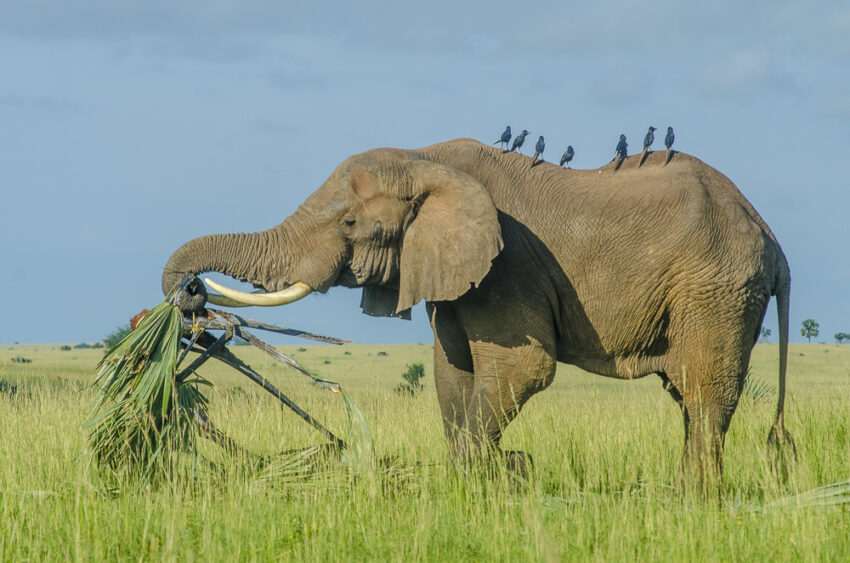
The Park is home to an impressive variety of wildlife. The park supports around 76 species of mammals and more than 450 bird species.
Large mammals living within the park include:
-
Elephants
-
Lions
-
Leopards
-
Rothschild’s giraffes
-
Cape buffalo
-
Uganda kob
-
Hartebeest
-
Warthogs
-
Oribi
These animals can be found throughout the park’s savanna landscapes and woodlands. The Nile River corridor is particularly important because it provides water and vegetation that attract many species.
The river itself is also home to large populations of hippopotamuses and Nile crocodiles. These animals are closely associated with the riverbanks and wetlands of the park.
The presence of both large herbivores and predators highlights the ecological importance of Murchison Falls National Park as one of Uganda’s major wildlife conservation areas.
Birdlife of Murchison Falls National Park
Birdlife is another important aspect of biodiversity in Murchison Falls National Park. The park supports more than 450 recorded bird species, making it one of the most significant bird habitats in Uganda.
Different ecosystems within the park provide habitats for various bird species. These ecosystems include:
-
Savanna grasslands
-
Riverbanks and wetlands
-
Woodland areas
-
Tropical forests
Among the bird species recorded in the park are:
-
Shoebill stork
-
Goliath heron
-
Grey crowned crane
-
Kingfishers
-
Weaver birds
The diversity of birdlife reflects the ecological variety found throughout the park and the importance of its wetlands and river systems.
Forest Areas and Primates
Although Murchison Falls National Park is widely known for its savanna landscapes and large mammals, forest areas within the park also support important wildlife populations.
Two of the notable forest areas are Budongo Forest and Kaniyo Pabidi Forest. These forests are home to chimpanzees and several other primate species.
Primates found in these forests include:
-
Chimpanzees
-
Colobus monkeys
-
Red tailed monkeys
Budongo Forest in particular supports one of the largest populations of eastern chimpanzees in East Africa. These forests therefore play an important role in conservation and research related to primates.
History of Murchison Falls National Park
The history of Murchison Falls National Park is closely linked to an outbreak of sleeping sickness in the early twentieth century. This disease, caused by parasites transmitted through the tsetse fly, affected many communities living along the Nile and in the surrounding areas. Because of the danger posed by the illness, colonial authorities relocated people away from the most affected regions. As settlements and livestock disappeared, wildlife populations began to recover and spread across the landscape. The absence of intensive farming and grazing allowed natural habitats to regenerate, creating the conditions that later made it possible to establish a protected area. When the park was officially designated in 1952, much of the land had already returned to a largely wild state, shaped by both nature and the historical impact of sleeping sickness on human settlement.

Why visit Murchison Falls National Park?
In the words of one of our guides:
“Murchison Falls National Park is truly one of Uganda’s standout destinations. As the largest national park in the country, it offers an incredible mix of dramatic landscapes shaped by the Nile and a rich variety of wildlife.
On a typical day here, you move from open savanna plains to riverine habitats, from forest patches to wetlands, spotting elephants, giraffes, hippos, and countless bird species along the way. And of course, nothing compares to the moment you reach Murchison Falls itself. The Nile squeezes through a narrow gorge before plunging into the river below, a sight that stays with you long after you leave.
Managed as part of the wider Murchison Falls Conservation Area, the park continues to be a vital sanctuary for wildlife and an important part of Uganda’s conservation efforts. Visiting it is not just a trip it is an experience of seeing nature at its fullest.”